postimg
Nov 2010 29

For research for Postmortem, the upcoming WNEP show, Don tasked us with creating our own time capsule for each decade.

1950s:
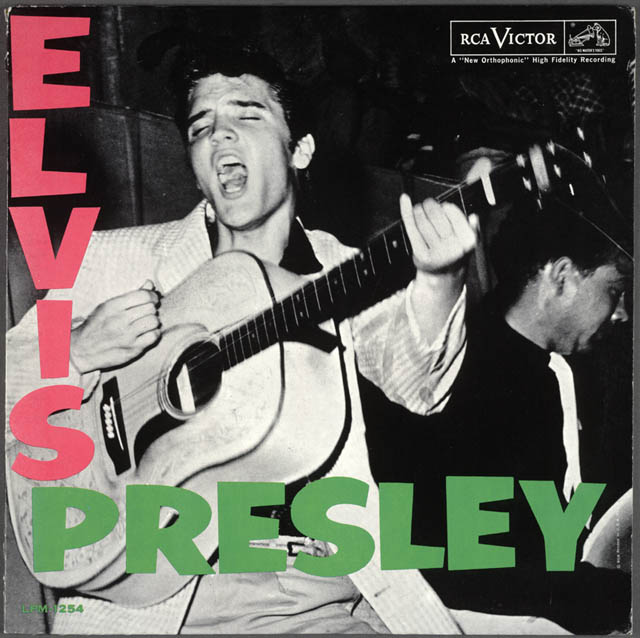
Elvis album “Elvis Presley” (1956)

Elvis’ debut album, released on RCA Victor in 1956. The album itself was the first rock n’ roll album to reach number 1 on the Billboard charts, and it stayed number 1 for 10 weeks.
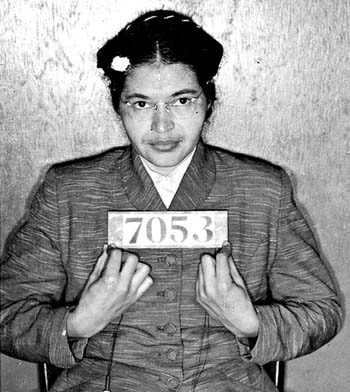

Rosa Parks mugshot photo (1955)

Parks was not the only one to refuse to move from her seat, but her arrest sparked the Montgomery Bus Boycott, and set the stage for the Civil Rights movement of the 1960s.


Sputnik 1 sound recording (1957)

The launch of Sputnik set off not only the space race (NASA was founded soon after in 1958), but also the Cold War itself. Not only is Sputnik the first viable man made object in space, which I imagine was terrifying in a decade filled with atomic war warnings, it also could communicate back to earth with a signal that anyone with a good ham radio could pick up on. Listen to the recording here.

Polio Vaccine (1952)

Though it wasn’t actually announced until 1955, and not available for purchase until early 1960s, the Polio vaccine developed by Jonas Salk has been cited as the most important invention of the 20th century.
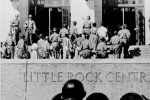

Newspaper Clipping of the “Little Rock 9″ (1957)

The Supreme Court case Brown v. the Board of Education in 1954 barred the segregation of all schools throughout the nation. It wasn’t until 1957 (through school boards’ plans of gradual integration) that the ruling was really felt in the country, as 9 students showed up for their first day of class at Little Rock Central High School. The governor, supporting the segregationists, ordered the Arkansas National Guard to block the students from entering the school. Pres. Eisenhower soon sent federal troops from the 101st Airborne division and nationalized the Arkansas National Guard to escort the students in.
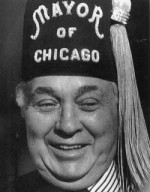

Election Ballot of Richard J. Daley for Mayor (1955)

Before the current Mayor Daley, there was the Mayor Daley, the undisputed “boss” of Chicago. First elected Mayor in 1955, he served for 21 years, and was a crucial part of Chicago’s history, both good and bad.
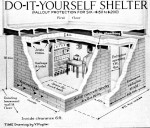

Instructions for a Bomb Shelter Kit

My father remembered growing up and seeing people who had actual bomb shelters on their property. I don’t know if he had one himself, but the market for bomb shelters was certainly alive and well in the 1950s. Much of the propaganda of the time from Civil Defense also fed the idea that “duck and cover” was a legitimate safety exercise in the event of nuclear holocaust.
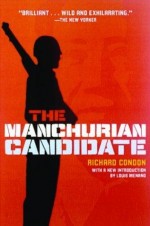

Novel of The Manchurian Candidate (1959)

Though it’s the movie that became so famous, the story from the novel hits on all the major fears of the 1950s that make a good thriller, from the Korean War to the Red Scare to China’s “communist threat”.
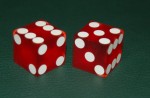

Casino dice from a Rush Street casino

The Chicago mob had a lot of power in the early and mid 20th century, and the 1950s was when a lot of it spread to owning and operating casinos in Vegas. There were still plenty of vices to be found in Chicago proper, and Rush Street was a reported hotspot for underground gambling.
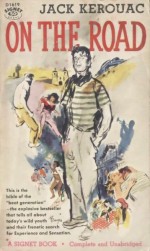

Novel of On the Road (1957)

Jack Kerouac’s novel has been called the defining work of the Beat Generation. It was cited as a huge influence on artists, musicians, and novelists from then to now, and the novel also exemplified the cultural shift that was just underneath the surface, and was to become more evident in the 1960s. When it was published, the New York Times wrote “its publication is a historic occasion”, while others roundly panned it.
Aug 2010 05

I know you love anthropology. And economic discussions. Or maybe you just love monkeys. But even if you only loved qualitative and quantitative analysis, this video would still be worth watching. Because it’s got the first example of Monkey Economics. Check it out, then follow me after the break.

Those monkeys really are cute, even when she talks about the looting and scamming they do to each other to get more tokens. What I really find adorable is the conclusion that we humans aren’t just risk-averse, but loss-averse. That we always judge in relative rather than absolute metrics, by which I mean we continue to fight the most recent war and that these factors lead us to make really stupid mistakes again and again.

What does this have to do with theater?

Our inherent loss-averse nature puts us in a mindset where we shudder in fear of losing—audience, money, donations, talent—and make poor decisions because of it. (It’s why some theaters would rather take a gamble on no or free resources for their show (stage management, lighting/set/graphic design) in the hope that it’ll still pay off.) And our over-reliance on recent past events means we focus on the last mistake or triumph to the detriment of the task at hand.

Your last show was a huge success, and audiences were never a problem. Obviously this show will be the same, no need to approach anything differently this time around, you’ll of course have a full-house for the whole run. Sure, your last show was titled “Free Beer”, the cast contained the most popular guy in Old Town, and this is your post-apocalyptic take on Hedda Gabler, but you’ve built a loyal audience, right? And since it was so easy last time, lets just post a Facebook event instead of worrying about promotion.

Your new play is great. So great there’s no need to workshop it. Or to get any other opinion. Because you already wrote the ending, and to have to make edits now means a defined loss. Isn’t it totally worth it to take the risk that you’re just awesome, and get it up on stage? If people don’t like it, they can tell you after the show—you’d be happy to do rewrites and then remount it next year. There’s no way you’ll grow more attached and afraid of changing it once you’ve seen it performed.

It’s been 2 months, it’s fundraising time again, better hit those email lists to invite people out to your 15th tetra-annual fundraising event. You weren’t lucky enough to get the Chase money, even though you spammed your email list, unsubscribes be damned. And you’ve already spent it in your head, so it’s time to triple down on the silent auction to recoup some of those perceived losses. And yet no one is clicking “Will Attend” on your Facebook invite - what gives?

What gives is that your audience is made up of monkeys too. And they quickly found out who provided the best tasting grapes for their tokens. They have a relative experience bias too, but they also have something even scarier: a lack of personal investment. Because they see a whole monkey marketplace of theater, and if they didn’t have a personal connection to you guys, then you’re left selling yourself on the merits when their friend is also in a show for another theater company.

Or even worse, we forgot to wear our different colored shirts, and they can’t tell us apart. That would be really scary. Because then those audiences just approach this like any transaction, and the bad decisions that one company make affects us all.

postimg
Jul 2010 23

[note: Amanda, look away now]

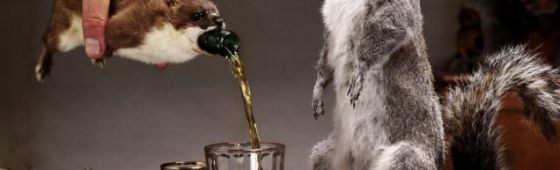
Yes, that is a beer bottle stuffed inside a dead animal. But not just any beer. “The End of History” is the newest in the “World’s Strongest Beer” category, weighing in at 55% al. or 110 proof, and costs £500 a bottle.

From the brewmaster himself:

BrewDog co-founder James Watt describes The End Of History as “a perfect conceptual marriage between taxidermy, art and craft brewing”.

“This is the beer to end all beers. It’s an audacious blend of eccentricity, artistry and rebellion; changing the general perception of beer, one stuffed animal at a time,” he continues.

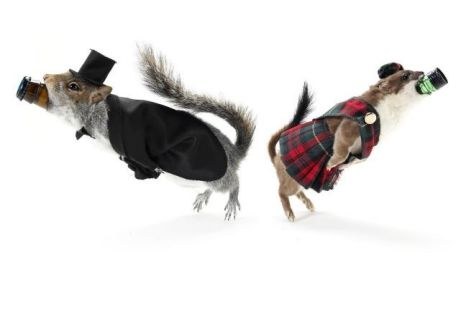
It should be noted that the animals were not killed for bottling, but died of natural causes before they were stuffed by taxidermists…and put into formal wear.

Alright, so this is definitely weird, and pretty gimmicky, but it’s bold at least, and majorly outside the box. What’s the theater equivalent? What theater is going the extra mile to do shows that are as weird as a 110 proof beer inside a dead rodent? And what theater makes it worth £500? Put your nominations in the comments.

(via Metro.co.uk, photo credit David Branfield /BrewDog/PA Wire)

postimg
Jul 2010 12

If you haven’t heard Don’s vitrol about Chase Community Giving then it doesn’t make much sense for you to read a post with Don’s name in the title. If you haven’t been contacted by everyone you never knew to vote for them in Chase’s “New Way Forward in Giving”. then I envy you. I wasn’t against it at first, but it’s become so Lord of the Flies that I’ve been turned.

I don’t agree with Don that because Chase is inherently evil, we’re all evil as well for begging Chase for money. One, I use Chase, they are evil, but I appreciate that they have ATMs downtown. Two, if their foundation grant wing was giving out money (as opposed to their marketing wing) then I personally would have no problem taking it for my own NFP. I also don’t buy that we’re all whores so what does it matter, but that’s a different argument.

Here’s where Don is right on the (giveaway) money though.

In the desire for the easy Chase Bank money, I believe a lot of the participating companies have overlooked the potential consequences of the relentless online telemarketing, spam-oriented hawking for votes. I believe that the successes of campaigns like this Chase thing is going to lead to more of them, which in an effort to compete financially with institutional theater, Chicago artists will become known more for the annoying plea for money than for the work.

They’re ruining their audience base, and they’re destroying their ability to fundraise in the future, especially for those who pushed too hard and then didn’t end up getting any money. A month from now, when they hold their already scheduled Summer Karaoke Donata-Blast, and they send out a Facebook invite, no one is going to show up. Why would they? They already did their part by “clicking” for the cause.

I reached a boiling point when I saw one theater AD on Facebook comment giving away two comps to their next show for a vote. Oh yes, please, destroy not only your fundraising base but the worth of your shows as well. Let’s all devalue the work that we do for a vote, and make it even harder to convince people to pay for any theater.

So here’s my modest proposal.

You give me 2 comps to your next show and I will vote for you. I will also make it my mission to never go to another show of yours again, and I’ll try to convince others to do the same. You’ve got 15 hours left for a chance at $20K, and all it’s going to take is the guaranteed loss of at least one audience member ad infinitum. If you do the math, it’s a pretty good deal. You’ll likely only wring out of me $1600-2500 over the next 10 years at a typical season schedule. I’d have to convince 10 people to do the same to match the $20K you’re getting. So do it. Make the statement that a Facebook vote is the ultimate in artistic endeavor. Tell the world that an audience for your work is worth less than a chance at cold hard cash right now. It’s easy. It just takes one click.

postimg
Jun 2010 28

Welcome to the new WNEP website. Take a look around.

All (or at least most) of our company members will be blogging about WNEP stuff, their own stuff, and stuff. We would love for you to support our shows by coming out to see them. We’d love for you to check out their shows because the WNEPeeps rock.

Why is that so hard to understand?

Page 2 of 3123