postimg
Jan 2011 18

August 8th, 1964.
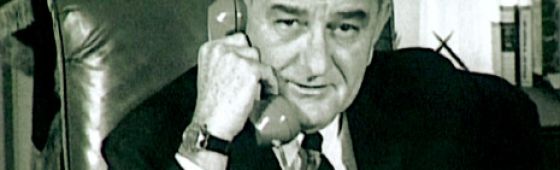
Just listening to this audio of a telephone call between President Johnson and the Haggar Pants company really makes it clear just how important pants were to this man.

From kottke.org:

In want of slacks, President Lyndon Johnson called up the Haggar clothing company and requested several pairs be made in the style of a pair he already owned. Except a little bigger in the crotch…”down where your nuts hang” as Johnson put it.

As you listen to the whole thing, just keep in mind that this man passed the Civil Rights Act, Medicare and Medicaid and was known as the greatest congressional negotiator of our time. And he wanted a little more space because it was “like riding a wire fence”.

postimg
Dec 2010 15

Assignment from Don: ” Henri, you have to give me a song-a-decade from 1920-2010 that you would fuck your girlfriend to.”
Patrick: “And not your wife, your GIRLFRIEND, or we’ll fucking know!”

Ladies and Gentlemen, songs by which to recreate:

1920′s
Fats Waller - “Ain’t Misbehavin’ “
I chose this because it seems to me that a whitey with a lady might be experimenting with the darkie music about this time.
You’re already taboo with the music, so it’s an easy slide into the pantaloons with the “We’ve gone this far, it feels good, and no one’s hurt, so why not go further and see how it feels?” line.

1930′s
Bing Crosby- “Unchained Melody”
Bing Crosby gets ME wet, so naturally crooning about endless love when everything else is falling to shit is a sure fire way into the potato-sack-cum-panties of your depression-era-girl.

1940′s
Tommy Dorsey w/Frank Sinatra - “Say It (Over And Over Again)”
A big band playing the backup tunes to the Crooning of Old Blue eyes, mix this with a Sailor suit and buddy, you’re on the fast track to pussy cat town.

1950′s
Elvis Presley- “Love me Tender”
Show your sweeter side by asking her for her love, right before you “rock and roll.”

1960′s
Janis Joplin - “Piece Of My Heart”
Raspy woman singing about “taking”, pop this in the 8-track and if the van is a rockin’….

1970′s
Marvin Gaye– “Let’s Get It On”
If I have to explain or justify this one, then I’ll take your sex card now.

1980′s
The Police- “Every Breath You Take”
Something about being stalked gets us randy in the 80′s, so pop in the cassette, pretend your Pinto is a Lamborghini and bang, bang, bang.

1990′s
Tonic- “If You Could Only See”
Personal favorite, raspy voice displaying angst to the fact that you only know half as much love as I have for you. Drop it in your 5-Disc CD changer, hit loop, and make it last a whole 10 minutes.

2000′s
Creed - “With Arms Wide Open”
Seriously, the hardest decade with a plethora of pop songs I couldn’t get anyone over the age of 14 wet to, AND THE cooler-than-thou underground bands so hip and new wave that I’d spend more time deciphering the lyrics to than getting slick with, all that leaves me is a left over from the late 1990′s, so upload this to your first version I-pod, hit recycle, and pound her good…but remember to plug it in, cause those bitches sucked the juice from a battery. (I-pod, not the lady ya perv…although….)

Dec 2010 08

Whoo! Not knowing much fashion terminology AND not bein’ a guy caused this assignment to kick me in the be-hind! But I learned a lot. So here goes…

1920′s

The beginning of this decade saw many men returning from the world war to closets full of clothes from the teens. So the sacqe suit remained in popularity. It’s a three-piece suit normally seen with a bowler hat. Detachable cuffs and collars were still common for easy cleaning. Eventually though, youth broke away from the dress of their elders, first choosing lighter colors for their suits, then creating the following styles:

For the casual male, knickers and a sweater and/or a Norfolk coat with boots or oxfords or brogues.
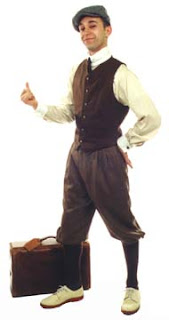
Knickers weren’t allowed at Oxford or other schools, so young men wore their knickers anyway, but covered ‘em up with baggy pants. These baggy pants were termed “Oxford bags” and were quite the thing.
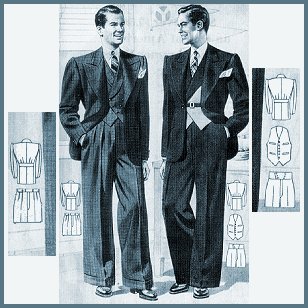
In addition to oxford suits coming into vogue in the 1920′s, the jazz suit made its appearance. Note the narrower cut on the jazz suits. Cuffed pants were popular no matter which you preferred. The jazz suit with it’s higher waist and tight cuffed legs was the forerunner to the zoot suit. This pic doesn’t do the jazz suit justice-as typically the jackets had shoulder pads and were a teensy bit longer.
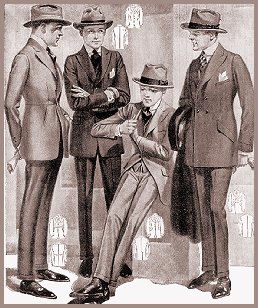
Please note all the hats! Men didn’t romp about without their hats-whether they wore fedoras, panamas, boaters, or sports, they had their heads covered!

1930′s

Of course after the stock market crash late in the year of ’29, the beginning of this decade found itself in the Great Depression. Folks don’t have money to spend on new clothes and “out of business” sales in the garment industry are prevalent. Of course, the gangsters aren’t hit too hard by the depression and although criminals, are setting the style with their classy, business-like (albeit a bit flashy) attire.
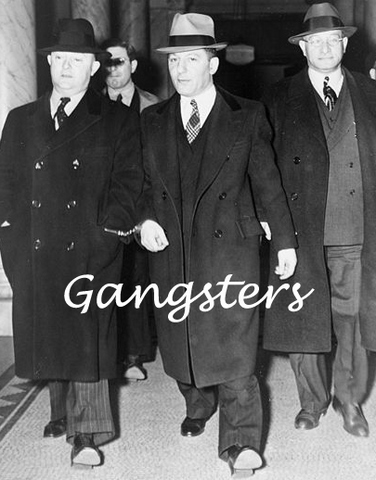
With the gangster suits, you’ll notice pinstripes, some flashy color on shirts and or ties/handkerchiefs, pronounced shoulders, narrower waits, and wider trouser bottoms.
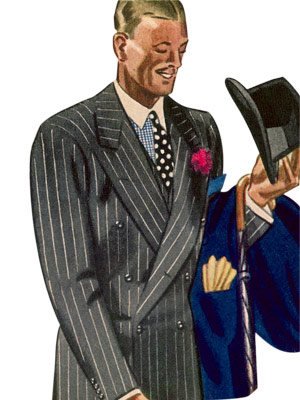
In 1935, Roosevelt instituted “The New Deal” and people had the resources to buy clothes again! The double breasted suit came into fashion for the first time (and has remained fairly popular into present day)! Perhaps influenced somewhat by the gangters, suits of the 30′s bore patterns, broad shoulders, and wide legs.

Stars of the day helped make the double-breasted suits quite popular.
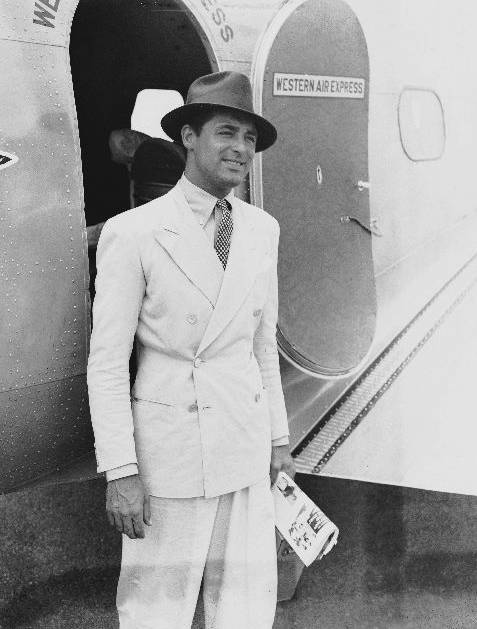
In the night clubs of Harlem, the zoot suit was just starting to show up. But I’ll cover those suits in the forties.

1940′s

In March of ’42, rationing was put in place in the U.S., which meant fabrics like cotton and wool just weren’t as available. But there was an “apparel consultant” to the War Production Board (believe it or not) and he declared that it was every designers’ patriotic responsibility to design fine clothes that could be worn in multiple seasons with a minimum use of fabrics. Rayon entered common use. Please note that cuffed pants, pocket flaps, and other extra material (for bagginess, etc…) is absent in the suits of the early 40′s.

Meanwhile, despite rationing (and perhaps as a rebellion against it), zoot suits come into vogue. Zoot suits had super baggy pants, incredibly long jackets, and large hats.
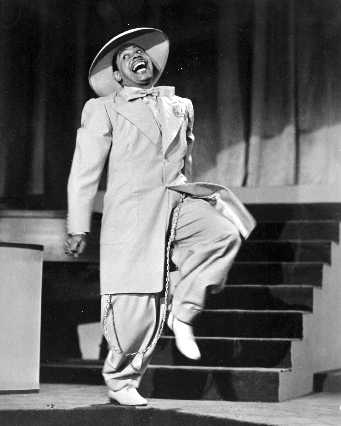
Some Americans saw the wearing of a zoot suit as an affront to the war effort and even the country. But it was also an easy way to target some of the immigrant populations (African, Mexican, Puerto Rican) for whom this style was popular.
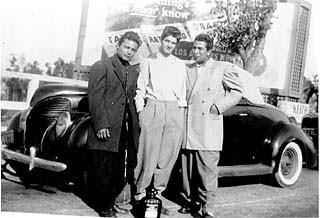
In fact many Latino youth were attacked by European-American sailors and marines in Los Angeles in 1943. These were called the Zoot Suit Riots and similar incidents showed up in other cities-including Chicago.

After the war and rationing, men’s suits favored full cut, long clothing in many colors.
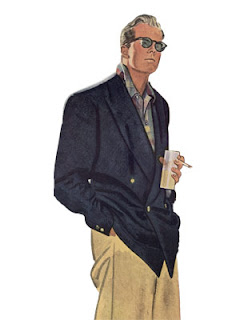
The end of the forties saw Hawaiian shirts first being worn in places like Florida and California. But men were becoming more casual in other parts too. In New York City at that time it was becoming a wee more common to see a man walking down the street with (gasp!) no jacket and shirttails flapping!

1950′s

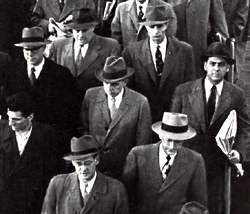
Conformity is the name of the game for business suits in the fifties. Dark blue, black, and charcoal were pretty much it. Nothing flashy here. Perhaps we can blame it on McCarthy for causing everyone to blend in and look like a good American. But whatever it was, the majority of the population dressed pretty conservatively and pretty much the same.
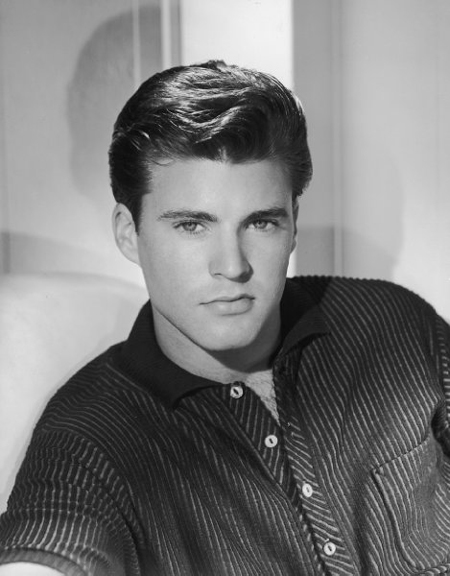
As for the younger man, the image of the blue jean and t-shirt wearin’ teen is actually a little misleading for this decade. Blue jeans were still only worn for outdoorsy sports and even teens in the 50′s were dressed pretty conservatively. Slacks, a button up shirt, and a sweater or sweater vest were standard. If you saw a guy in jeans and a t-shirt-beware! He’s a major rebel!
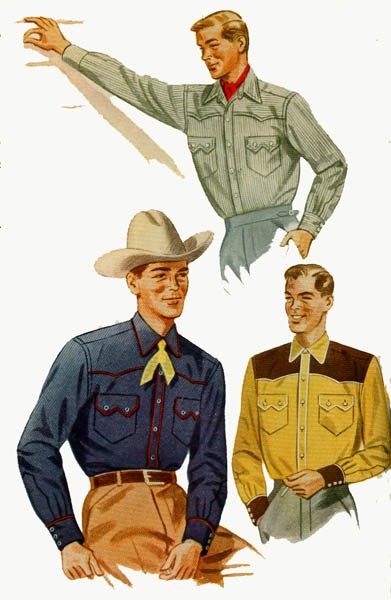
The economy was booming and the typical hard workin’ businessman had more leisure time. Loafers and Hawaiian shirts increased in popularity and thanks to popular western tv shows, so did western wear.
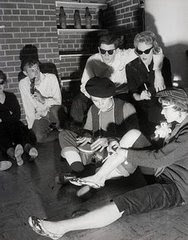
Meanwhile, the beatniks were inspired to dress like French artists of the day. Mostly all black, man. and a beret won’t hurt. Dig?
I’ll update the rest of this post later, taking us to the sixties and beyond!

Dec 2010 01

And the research continues! Another assignment we were given was listing popular catch phrases. I researched the 1940′s and here’s what I found!

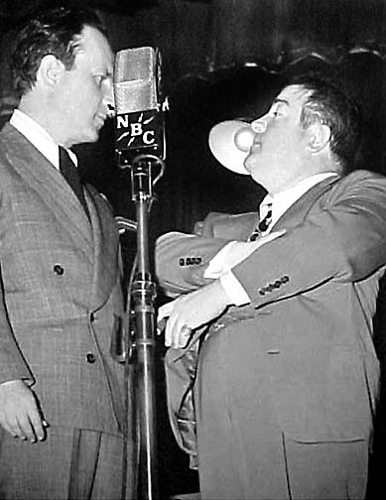
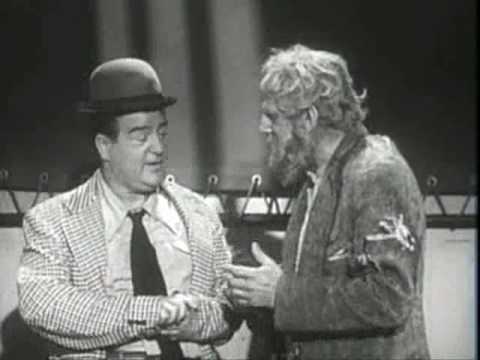
“HEY ABBOTT!!!!!!” –Costello (Abbott and Costello)

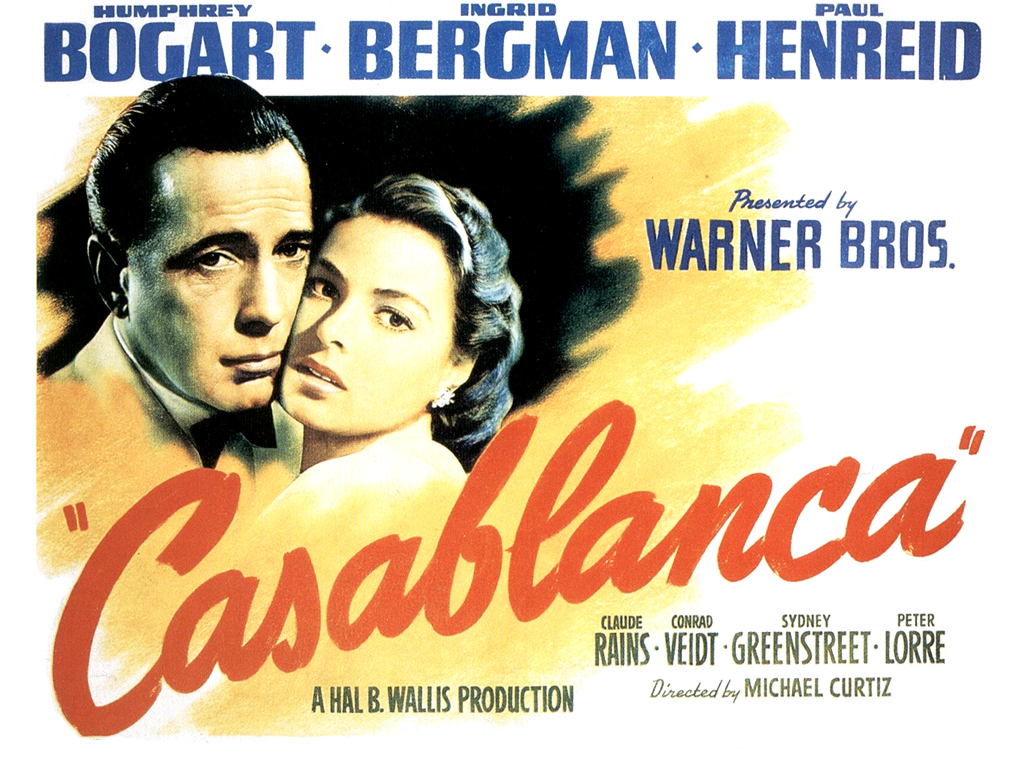
“Here’s looking at you, kid.”

“Louie, I think this is the beginning of a beautiful friendship.”

“We’ll always have Paris.” -Rick (Bogart) in Casablanca, 1942

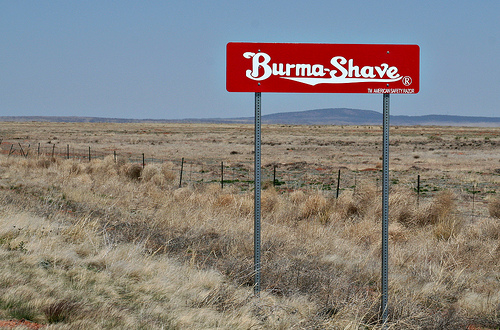
Don’t lose / Your head / To gain a minute / You need your head / Your brains are in it -Burma-Shave signs, 1947

Let’s make Hitler / And Hirohito / Feel as bad as / Old Benito / Buy War Bonds / Burma-Shave

Slap / The Jap / With / Iron / Scrap / Burma-Shave -Burma Shave signs from the war years

“Slowly I turned, step by step…..” -Also known as the “Niagara Falls Sketch,” this skit is rooted in burlesque and vaudeville. It appeared in many comedians’ routines and films in the forties including those of the Three Stooges and Abbott and Costello.

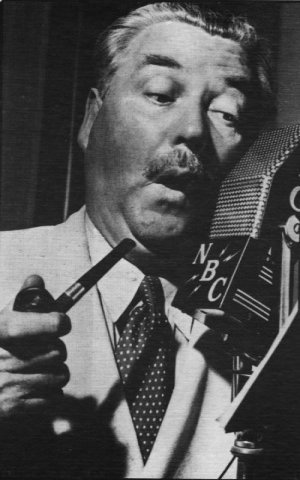
“The Shadow knows! Hhm hmm hmm hmmm hmmmm!” from The Shadow radio show (1930-54)

“a little dab’ll do ya!” -Brylcreem commercial

“Who’s Yehudi?” -Jerry Colonna on the Bob Hope Radio Show

This phrase started in the thirties, but became more popular in the early forties and was referenced on the show quite often. It became so big, that it was eventually referenced in other places, and a song was composed in 1940 by Bill Seckler and Matt Dennis. Lane Truesdale sang it in ’42.

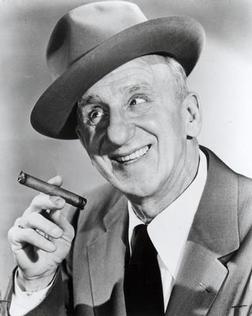
“Good night, Mrs. Calabash…wherever you are.” -Jimmy Durante (his sign-off on his radio show).

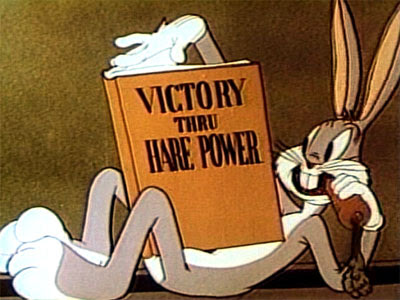
“What’s up doc?” -Bugs Bunny

“So Round, So Firm, So Fully packed.” -Lucky Strike commercial/ads, late forties

Merle Travis incorporated it into a song.

And here it is referenced in a Warner Brothers cartoon.

“I’m only three and a half years old.” -Matilda from the Abbott and Costello radio show

“Ain’t I a stinker!?” -Lou Costello and later, Bugs Bunny

“I dood it!’ -Red Skelton

postimg
Nov 2010 29

For research for Postmortem, the upcoming WNEP show, Don tasked us with creating our own time capsule for each decade.

1950s:

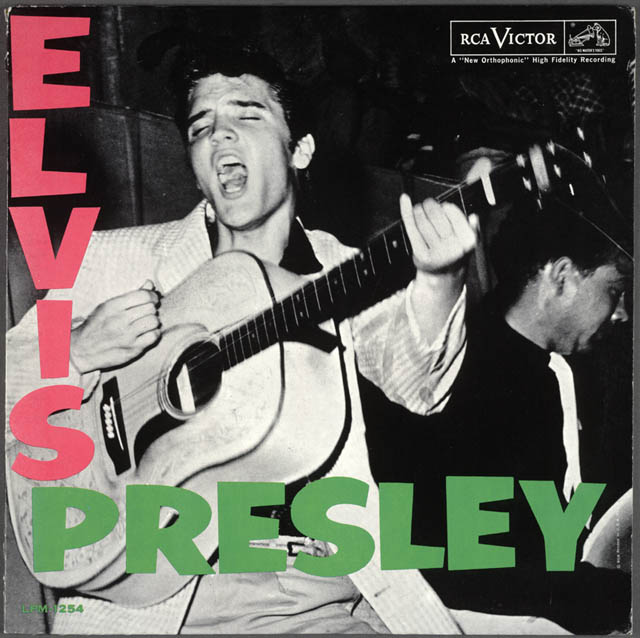
Elvis album “Elvis Presley” (1956)

Elvis’ debut album, released on RCA Victor in 1956. The album itself was the first rock n’ roll album to reach number 1 on the Billboard charts, and it stayed number 1 for 10 weeks.


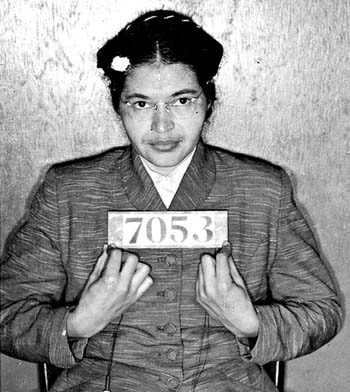
Rosa Parks mugshot photo (1955)

Parks was not the only one to refuse to move from her seat, but her arrest sparked the Montgomery Bus Boycott, and set the stage for the Civil Rights movement of the 1960s.


Sputnik 1 sound recording (1957)

The launch of Sputnik set off not only the space race (NASA was founded soon after in 1958), but also the Cold War itself. Not only is Sputnik the first viable man made object in space, which I imagine was terrifying in a decade filled with atomic war warnings, it also could communicate back to earth with a signal that anyone with a good ham radio could pick up on. Listen to the recording here.


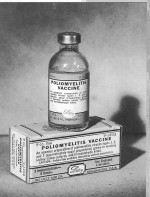
Polio Vaccine (1952)

Though it wasn’t actually announced until 1955, and not available for purchase until early 1960s, the Polio vaccine developed by Jonas Salk has been cited as the most important invention of the 20th century.


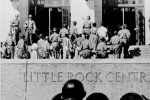
Newspaper Clipping of the “Little Rock 9″ (1957)
The Supreme Court case Brown v. the Board of Education in 1954 barred the segregation of all schools throughout the nation. It wasn’t until 1957 (through school boards’ plans of gradual integration) that the ruling was really felt in the country, as 9 students showed up for their first day of class at Little Rock Central High School. The governor, supporting the segregationists, ordered the Arkansas National Guard to block the students from entering the school. Pres. Eisenhower soon sent federal troops from the 101st Airborne division and nationalized the Arkansas National Guard to escort the students in.


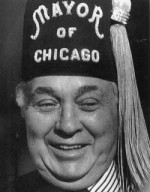
Election Ballot of Richard J. Daley for Mayor (1955)
Before the current Mayor Daley, there was the Mayor Daley, the undisputed “boss” of Chicago. First elected Mayor in 1955, he served for 21 years, and was a crucial part of Chicago’s history, both good and bad.


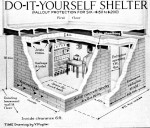
Instructions for a Bomb Shelter Kit

My father remembered growing up and seeing people who had actual bomb shelters on their property. I don’t know if he had one himself, but the market for bomb shelters was certainly alive and well in the 1950s. Much of the propaganda of the time from Civil Defense also fed the idea that “duck and cover” was a legitimate safety exercise in the event of nuclear holocaust.


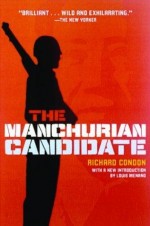
Novel of The Manchurian Candidate (1959)

Though it’s the movie that became so famous, the story from the novel hits on all the major fears of the 1950s that make a good thriller, from the Korean War to the Red Scare to China’s “communist threat”.


Casino dice from a Rush Street casino
The Chicago mob had a lot of power in the early and mid 20th century, and the 1950s was when a lot of it spread to owning and operating casinos in Vegas. There were still plenty of vices to be found in Chicago proper, and Rush Street was a reported hotspot for underground gambling.


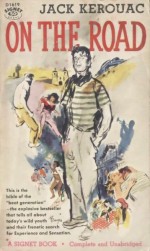
Novel of On the Road (1957)

Jack Kerouac’s novel has been called the defining work of the Beat Generation. It was cited as a huge influence on artists, musicians, and novelists from then to now, and the novel also exemplified the cultural shift that was just underneath the surface, and was to become more evident in the 1960s. When it was published, the New York Times wrote “its publication is a historic occasion”, while others roundly panned it.

Page 2 of 3123